PanPotPlates

One-Pot Vegan

Low-Carb Pescatarian Cauliflower Rice Sushi Bowls

By PanPotPlates Test KitchenReviewed by PanPotPlates Editorial TeamPublished May 4, 2026
Japanese-Inspired 25 mins lowcarbpescatarianveganglutenfreedairyfreeeasyquickhealthyfamily-friendlymealprep

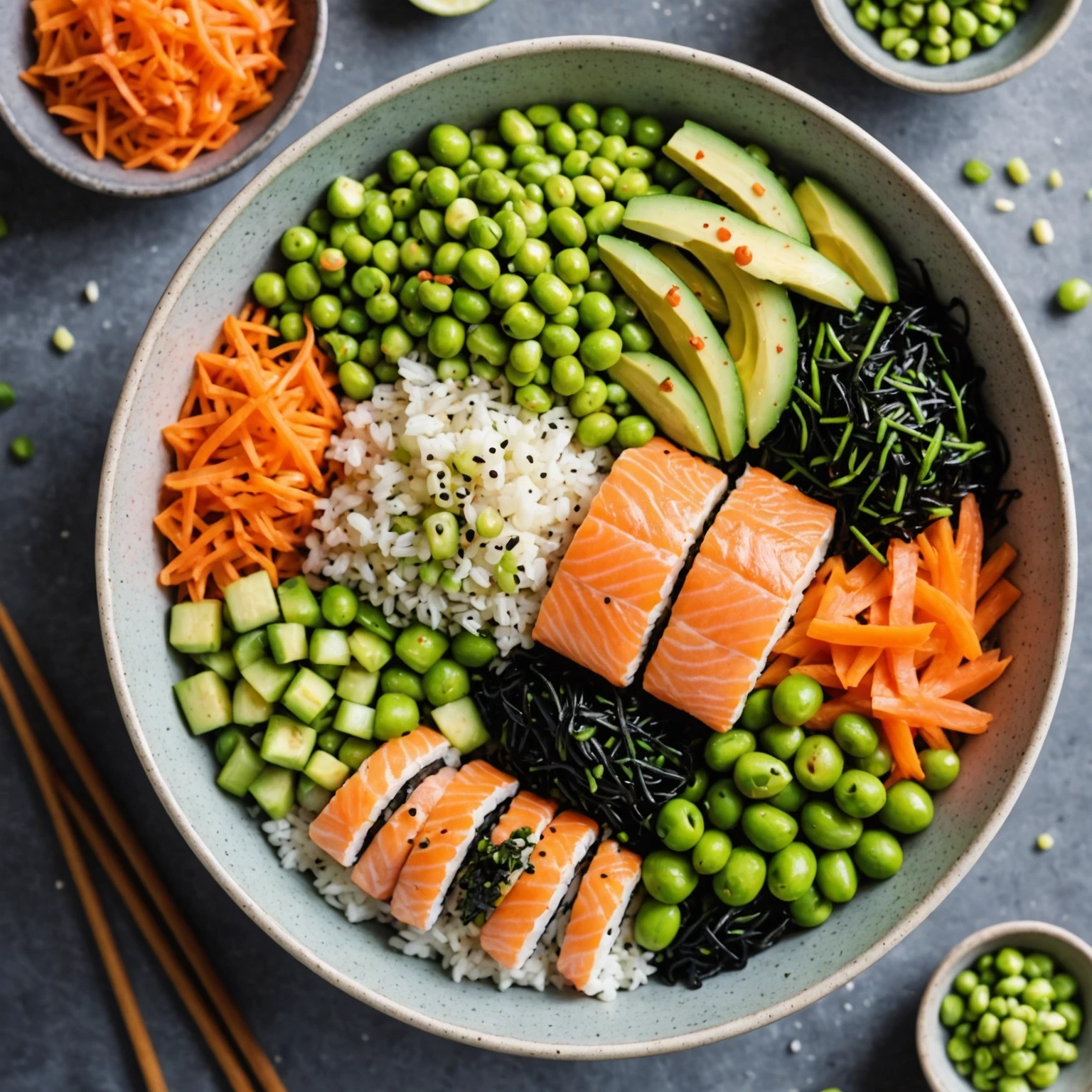
Savor a fresh, healthy Japanese-inspired low-carb sushi bowl that's pescatarian, vegan-friendly, gluten-free, and dairy-free. This quick, easy, one-pot cauliflower rice sushi bowl is perfect for nutritious family meals or meal prepping.

Low-Carb Pescatarian Cauliflower Rice Sushi Bowls
Prep 15 min
Cook 10 min
Total 25 min
Servings 4
Difficulty easy
Cuisine Japanese-Inspired

Recipe Details

Prep15 min
Cook10 min
Total25 min
Servings4
Difficultyeasy
CuisineJapanese-Inspired
Add To Favorites

Ingredients

Servings 4
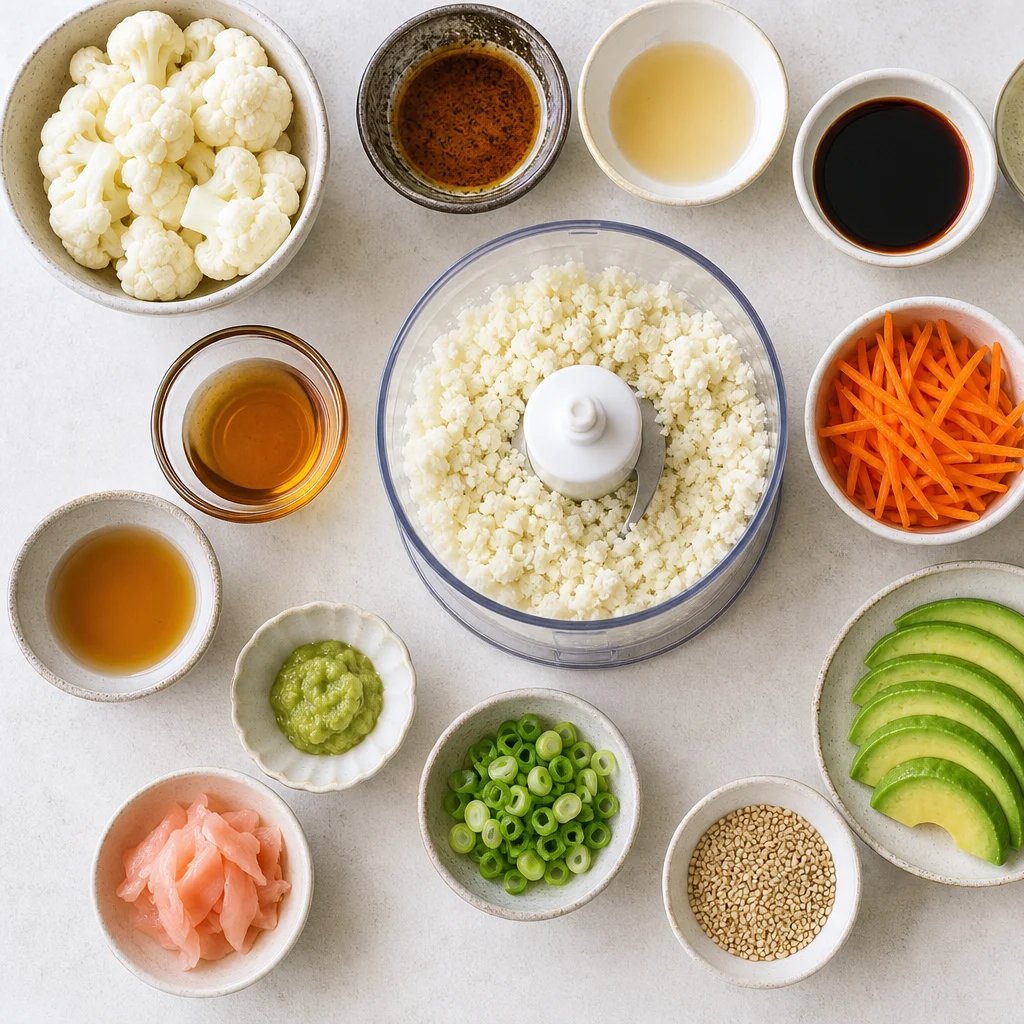
  • 1 large head cauliflower, riced (or 4 cups bagged cauliflower rice)
  • 1 tablespoon toasted sesame oil
  • 2 teaspoons rice vinegar
  • 1 tablespoon low-sodium tamari or soy sauce (gluten-free if needed)
  • 1 teaspoon grated fresh ginger
  • 1 teaspoon maple syrup or agave nectar
  • 1 cup shelled edamame, cooked
  • 1 medium cucumber, diced
  • 1 cup shredded carrots
  • 1 ripe avocado, sliced
  • 4 ounces smoked or cooked wild-caught salmon, flaked (omit for strict vegan)
  • 2 sheets nori, thinly sliced
  • 2 tablespoons toasted sesame seeds
  • 2 scallions, thinly sliced
  • Pickled ginger, for serving (optional)
  • Wasabi paste, for serving (optional)

Instructions

  1. Prepare the cauliflower rice by pulsing cauliflower florets in a food processor until rice-sized. Alternatively, use pre-riced cauliflower from the store.
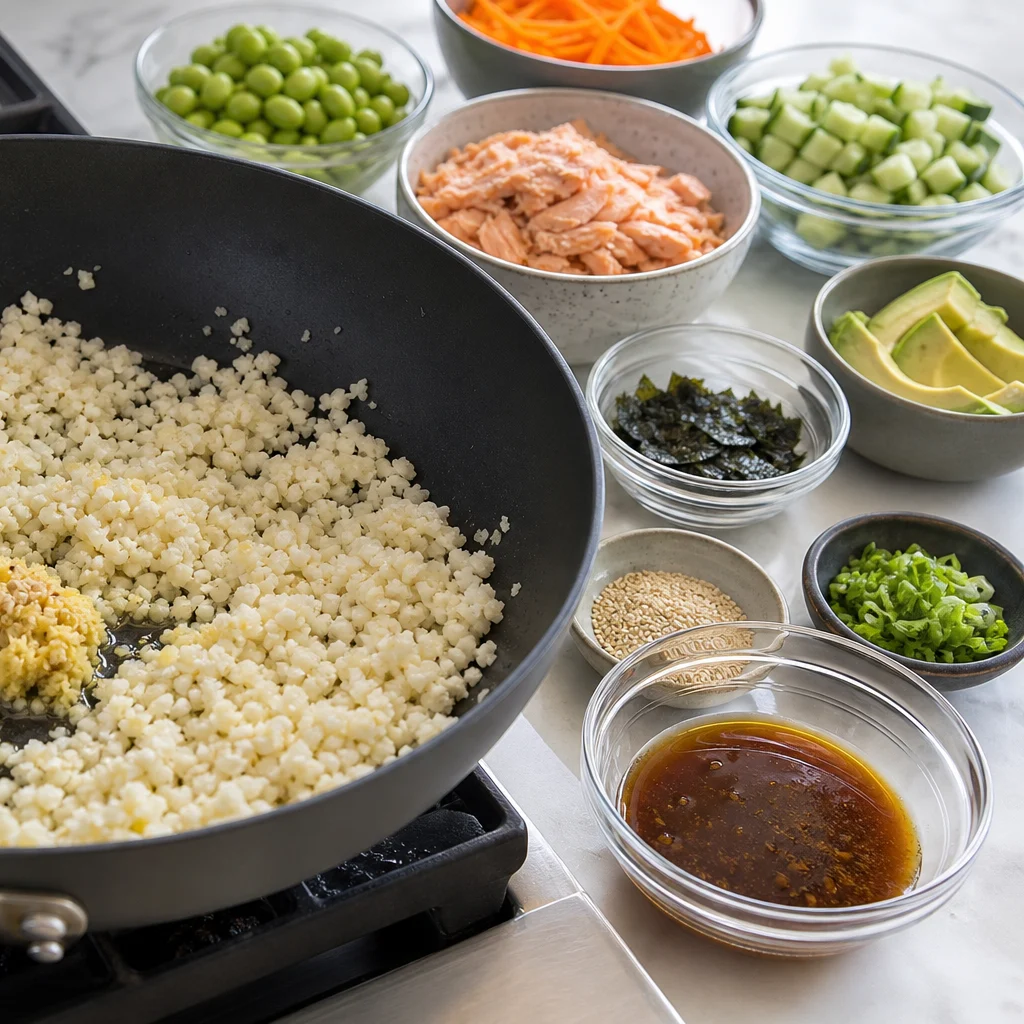
  2. Heat the toasted sesame oil in a large nonstick skillet over medium heat. Add the grated fresh ginger and sauté for 1 minute until fragrant.
  3. Add the cauliflower rice to the skillet and stir well to combine with the ginger and oil. Cook for 5 minutes, stirring occasionally, until slightly tender but not mushy.
  4. In a small bowl, mix together rice vinegar, tamari, and maple syrup. Drizzle over the cauliflower rice and stir well to coat. Cook for another 2 minutes, then remove from heat.
  5. Divide the cauliflower rice evenly among serving bowls.
  6. Top each bowl with cooked edamame, diced cucumber, shredded carrots, sliced avocado, and the flaked salmon (if using).
  7. Sprinkle sliced nori, toasted sesame seeds, and scallions evenly over each bowl.
  8. Serve immediately with optional pickled ginger and wasabi paste for an authentic sushi flavor experience.
  9. For meal prep, cover bowls tightly and refrigerate for up to 3 days. Keep avocado slices fresh by adding them close to serving time to prevent browning.

Frequently Asked Questions

Reader questions and answers for this recipe will appear here.

This flexible sushi bowl recipe lends itself to several ingredient swaps to match dietary preferences and ingredient availability:

  • Cauliflower Rice: Substitute with finely chopped broccoli or shaved zucchini for a similar low-carb base.
  • Smoked or Cooked Salmon: Omit for a fully vegan version; replace with marinated baked tofu or grilled tempeh to boost protein and texture.
  • Low-Sodium Tamari or Soy Sauce: Use coconut aminos as a gluten-free, soy-free, umami-rich alternative.
  • Maple Syrup or Agave Nectar: Brown rice syrup or date syrup are great vegan-friendly sweetener options.
  • Edamame: Replace with shelled peas or cooked chickpeas to vary texture and add plant-based protein.
  • Nori Sheets: Toasted seaweed flakes can substitute if nori is unavailable, or omit for a simplified bowl.

These ingredient swaps keep the meal aligned with the goals of a quick, easy, healthy, low-carb, pescatarian, vegan, gluten-free, and family-friendly one-pot vegan dinner.

Pan Or Pot Required

This recipe is ideally prepared in a large nonstick skillet, perfectly fitting its classification as a One-Pot Vegan meal. Cooking the cauliflower rice in one pan allows the ingredients to meld flavors while ensuring a quick and easy cooking process. A skillet provides uniform heat and prevents sticking, crucial for tender cauliflower rice and delicate seasonings.

Utilizing a skillet not only enhances flavor but also upholds the recipe's commitments to being healthy, gluten-free, and family-friendly. Minimal cleanup and cookware make this dish especially convenient for busy households and meal prepping purposes. Aim for a skillet spacious enough to stir and toss ingredients comfortably for even cooking.

Cookware Size Guidance

For preparing this One-Pot Vegan cauliflower rice sushi bowl serving 4 people, select a large nonstick skillet or sauté pan between 10 to 12 inches in diameter. This size ensures ample cooking surface to sauté ingredients evenly and stir without overcrowding. Skillets with moderately high sides (about 2 to 3 inches) help contain the cauliflower rice and toppings during mixing.

If preferred, a wide sauté pan or electric skillet with similar dimensions (capacity of roughly 3 to 4 quarts) works equally well, aiding in consistent temperature control and easy tossing of ingredients.

Following this cookware recommendation aligns with the goal of delivering a fast, healthy, family-friendly, low-carb, gluten-free, and meal-prep-friendly Japanese-inspired dish.

Cookware Swap Guidance

This recipe is crafted as a one-pot vegan skillet meal that’s quick, healthy, easy, and family-friendly. The preferred cookware is a large nonstick skillet to gently sauté cauliflower rice without sticking, preserving texture and flavor.

Alternative cookware options include:

  • Well-Seasoned Cast Iron or Stainless Steel Skillet: Requires close temperature monitoring and frequent stirring to prevent sticking.
  • Wok or Large Stir Fry Pan: Excellent for even heat and quick tossing, great for riced cauliflower dishes.
  • Electric Skillet or Griddle: Provides steady heat control for hands-off cooking and meal prep convenience.
  • Slow Cooker or Instant Pot: Adaptable by steaming cauliflower rice separately and warming the mixture before assembling and serving.

Avoid using sheet pans or casserole dishes, as sautéing the cauliflower rice is key for developing flavor and ideal texture before layering fresh ingredients.

Choosing the right cookware ensures this dish remains healthy, lowcarb, glutenfree, and dairyfree while enjoying the authentic flavors of a Japanese-inspired sushi bowl made quick and simple.

Leftovers Quality

This vibrant low-carb pescatarian cauliflower rice sushi bowl keeps well in the refrigerator for up to 3 days, making it a convenient option for meal prepping and easy weeknight meals. Store leftovers in airtight containers to preserve freshness, especially for cauliflower rice and cooked edamame. To retain optimal taste and texture, store avocado slices separately and add them right before serving to prevent browning.

For reheating, warm the cauliflower rice and edamame gently in a nonstick skillet over low to medium heat for 3-5 minutes, stirring occasionally to avoid dryness and uneven heating. Avoid microwaving fresh vegetables and avocado; instead, add them fresh upon serving. If using smoked or cooked salmon, reheat lightly or serve cold to preserve its delicate flavor.

By following these tips, you can enjoy flavorful, nutritious sushi bowls that support your low-carb, gluten-free, dairy-free, pescatarian, vegan-friendly, and family-friendly lifestyle.

Related Articles

Read related air fryer guides and cooking tips.

More Recipes

Explore more recipes you may like.

Reviews

Rate this recipe and share a photo of your result.

No reviews yet.

Newsletter

Stay In The Loop

Get fresh recipes, articles, and updates from PanPotPlates.