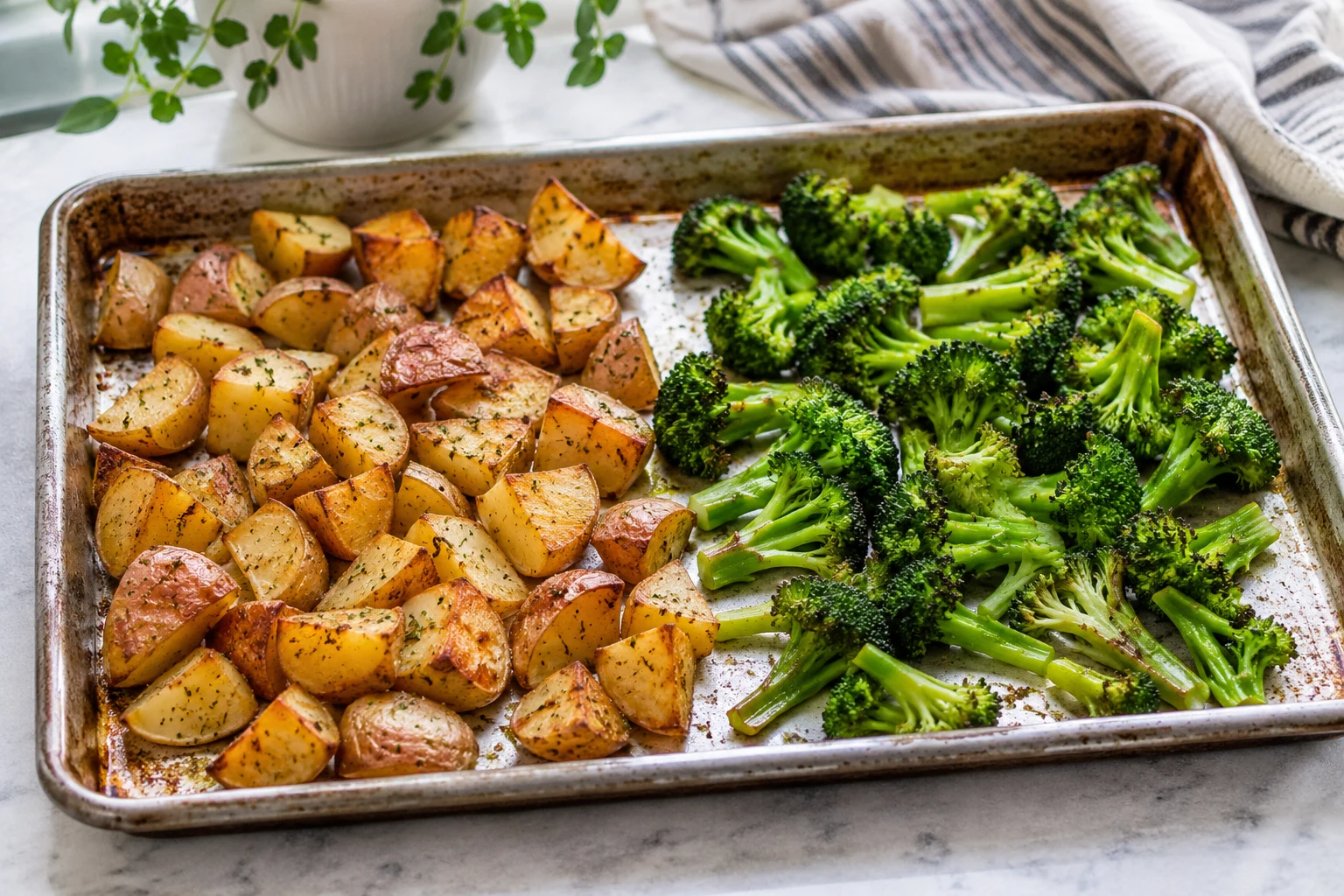
A mixed tray does not require every ingredient to enter the oven at the same moment. Dense potato chunks and small broccoli florets can need different treatment. A useful recipe coordinates their size, temperature and starting time rather than relying on one clock for everything.
Start with a recipe written for your ingredients. This guide explains how to read its sequence; it does not supply a new universal roasting schedule or a one-for-one substitution chart.
Read the cuts and sequence before heating
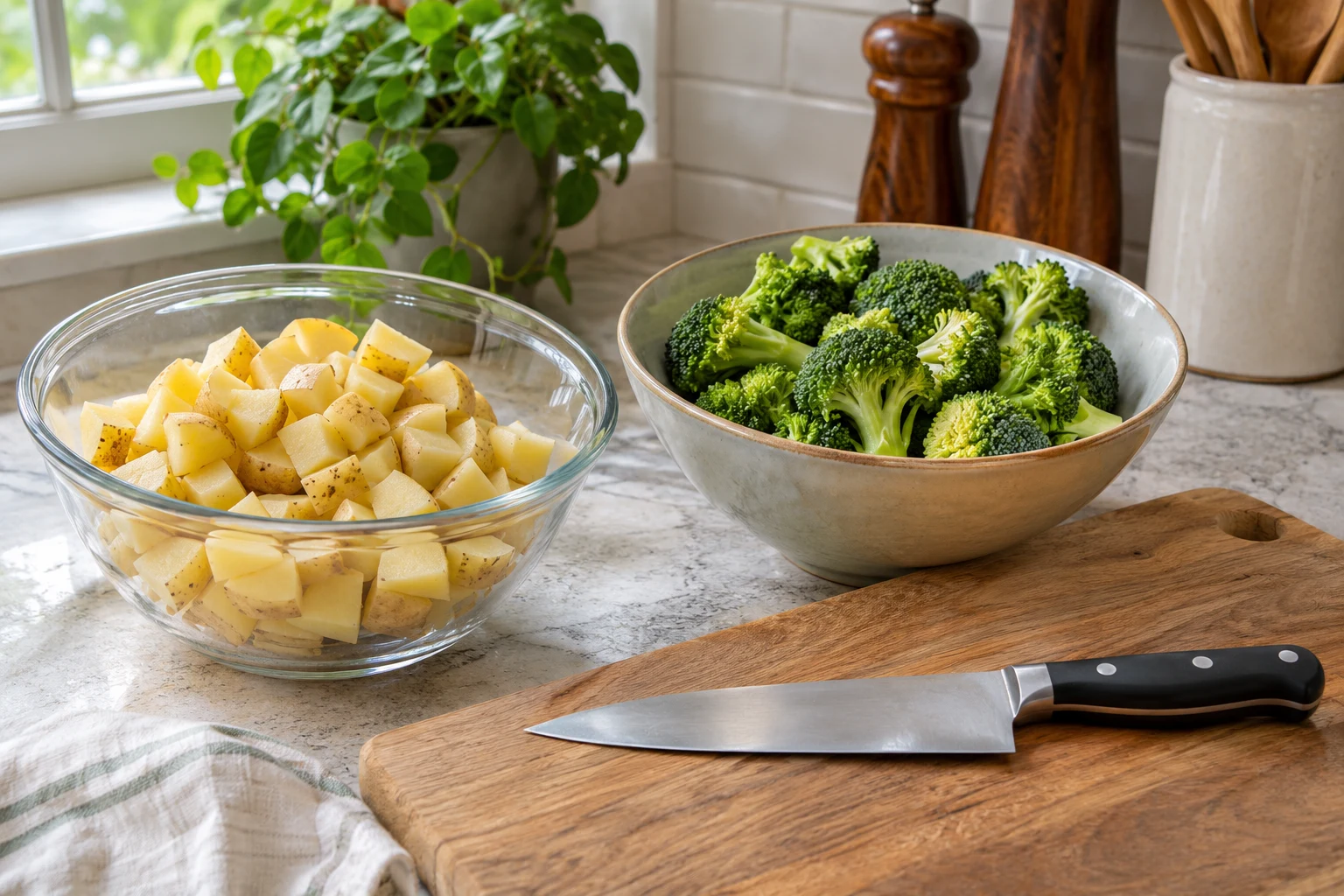
List the vegetables and note their preparation: peeled or unpeeled, whole or halved, small chunks or larger wedges. The word “carrot” alone does not specify a cooking time. A large piece and a thin slice behave differently even on the same tray.
Prepare similar pieces of the same vegetable consistently. Do not assume that cutting every ingredient to an identical shape makes all vegetables finish together. Their density and moisture differ.
Read ahead for additions after the first roasting stage, a turn halfway through, or a separate finishing sauce. Set those ingredients aside so they are ready when the hot tray comes out. Good Food's chicken-and-sweet-potato traybake, for example, adds broccoli later; that demonstrates a staged method rather than a timing rule for every tray.
Use a head start only when the recipe calls for it
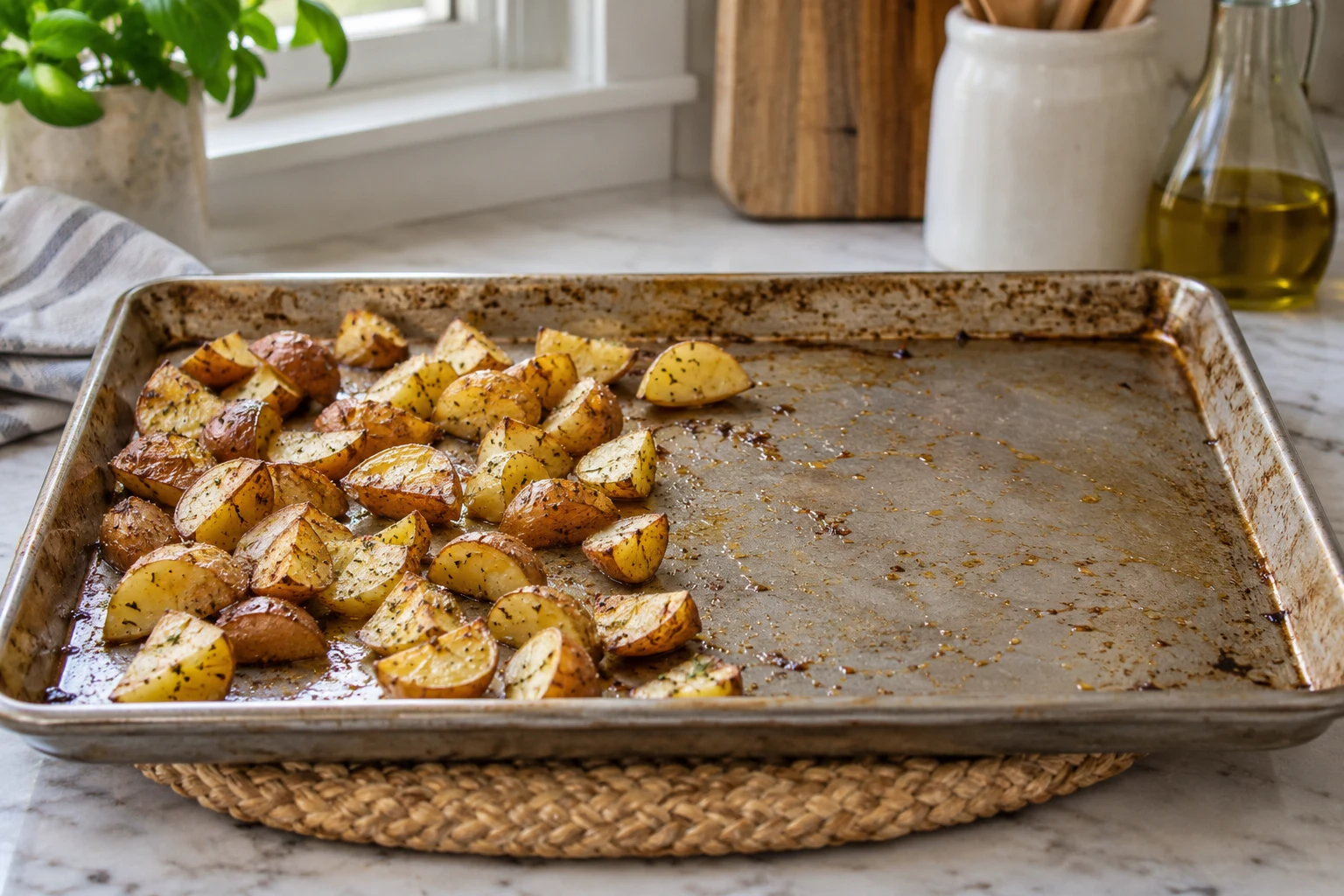
Follow the stated sequence and keep the oven setting the recipe uses. Do not add an arbitrary head start to a recipe already designed to cook its cut vegetables together. Changing both size and starting time makes it harder to judge what happened.
Spread ingredients with room around them instead of piling them into a deep mound. Use the specified pan size or a documented alternative. If the food does not fit as directed, choose a suitable recipe quantity or pan arrangement rather than packing extra servings onto the tray.
Handle the hot pan with dry oven mitts and place it on a stable heatproof surface when adding another ingredient. Avoid balancing it on the open oven door. Turn or redistribute food only as the recipe and cookware instructions allow.
Check each ingredient before serving
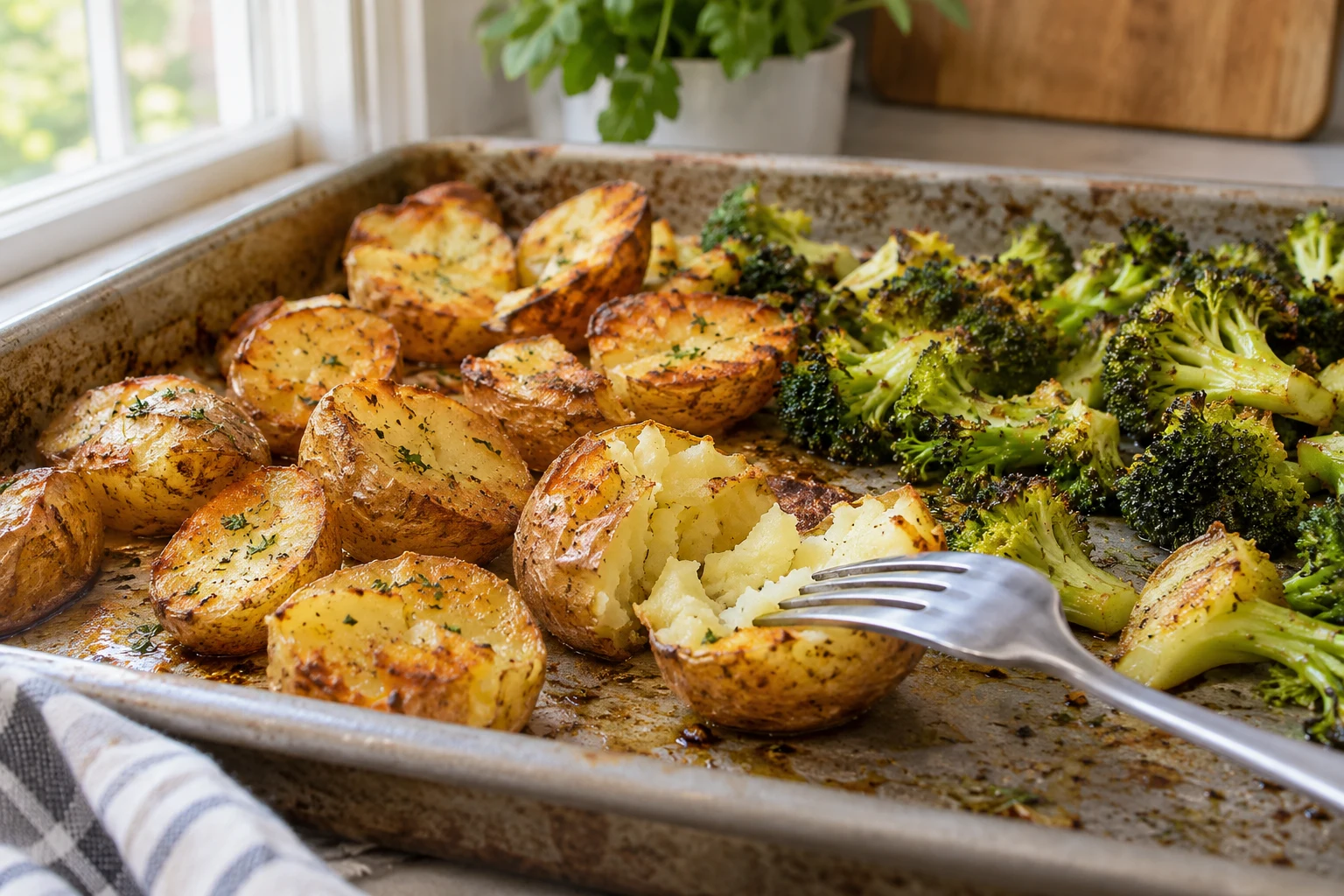
Check a representative piece of the slower-cooking vegetable through its center, not just its browned outside. Look at the faster-cooking ingredients too. Brown edges do not prove that a potato center has softened, and a soft potato does not establish that every other food is ready.
If a vegetable-only recipe allows it, remove a finished component to a clean dish while the firmer one continues. Avoid promising an exact rescue time: size, tray loading and the oven still matter.
For trays containing raw meat or fish, keep their handling and internal-temperature requirements separate from vegetable tenderness. Do not move ready-to-eat food through raw juices or lower a protein safety endpoint to match the vegetables.
Four coordinated vegetable-focused tray meals
Read each recipe's own cutting and timing instructions. These recipes already choose their ingredient combinations; use them as complete methods rather than mixing their timings into one new formula.
- Seasonal Roasted Cauliflower and Chickpea Sheet Pan Dinner
- Sheet Pan Spiced Tofu with Roasted Brussels Sprouts and Sweet Potatoes
- One-Pan Sheet Pan Ratatouille with Herbed Polenta
- Sheet Pan Roasted Chickpea and Butternut Squash with Tahini Drizzle
Source attribution: Good Food's published roasting methods and US food-safety temperature guidance. Photographs are AI-generated illustrations of preparation and texture checks, not our own timed roasting trials.