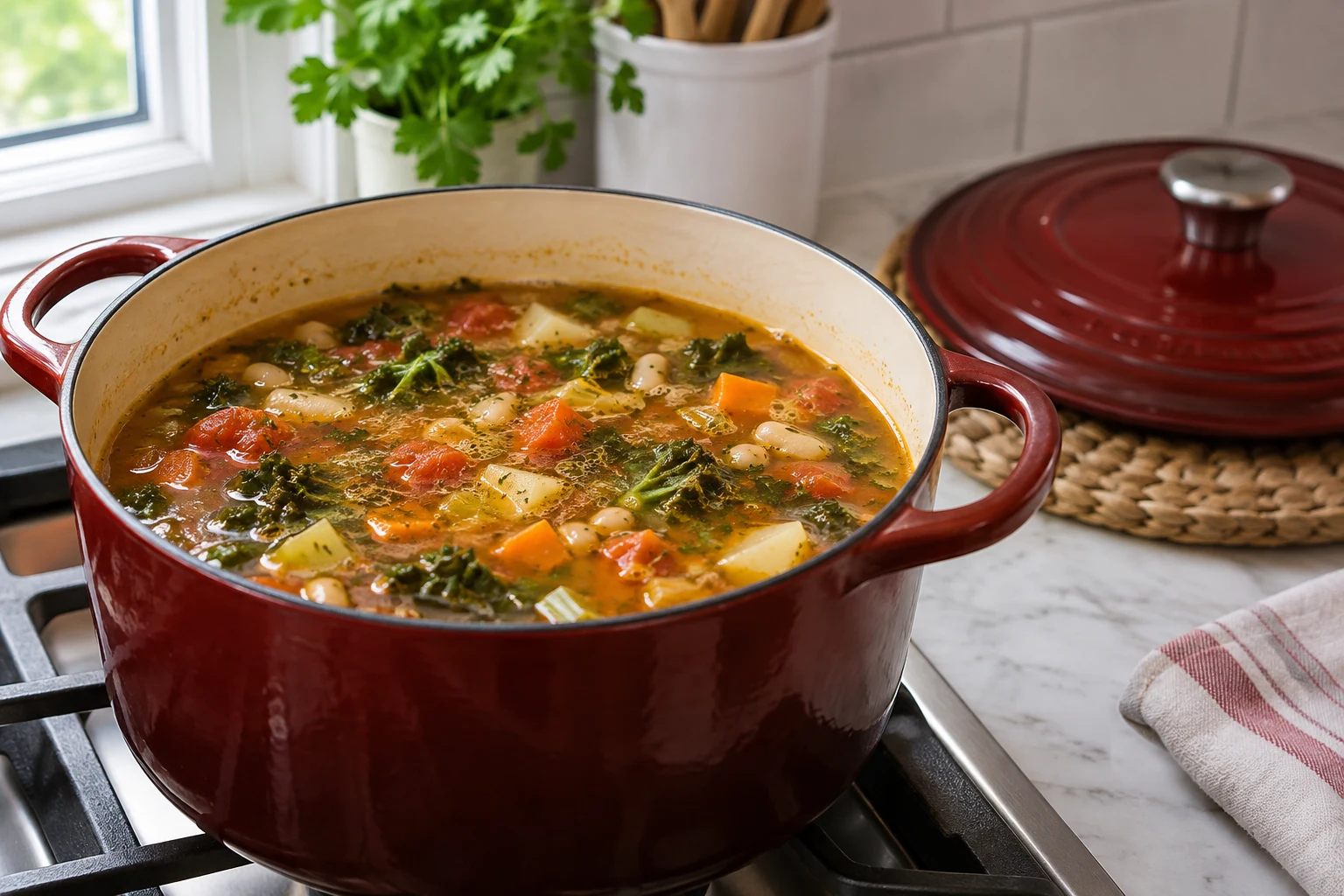
For a stovetop soup, start with the recipe's lid instructions. A covered pot loses less moisture; an uncovered pot allows more evaporation. Neither lid position replaces checking the heat, stirring when needed or watching the remaining liquid.
If the recipe just says “simmer,” first identify its purpose: are firm ingredients still cooking in broth, or is an already-cooked soup being reduced? That question is more useful than a universal lid rule.
Start with a gentle simmer
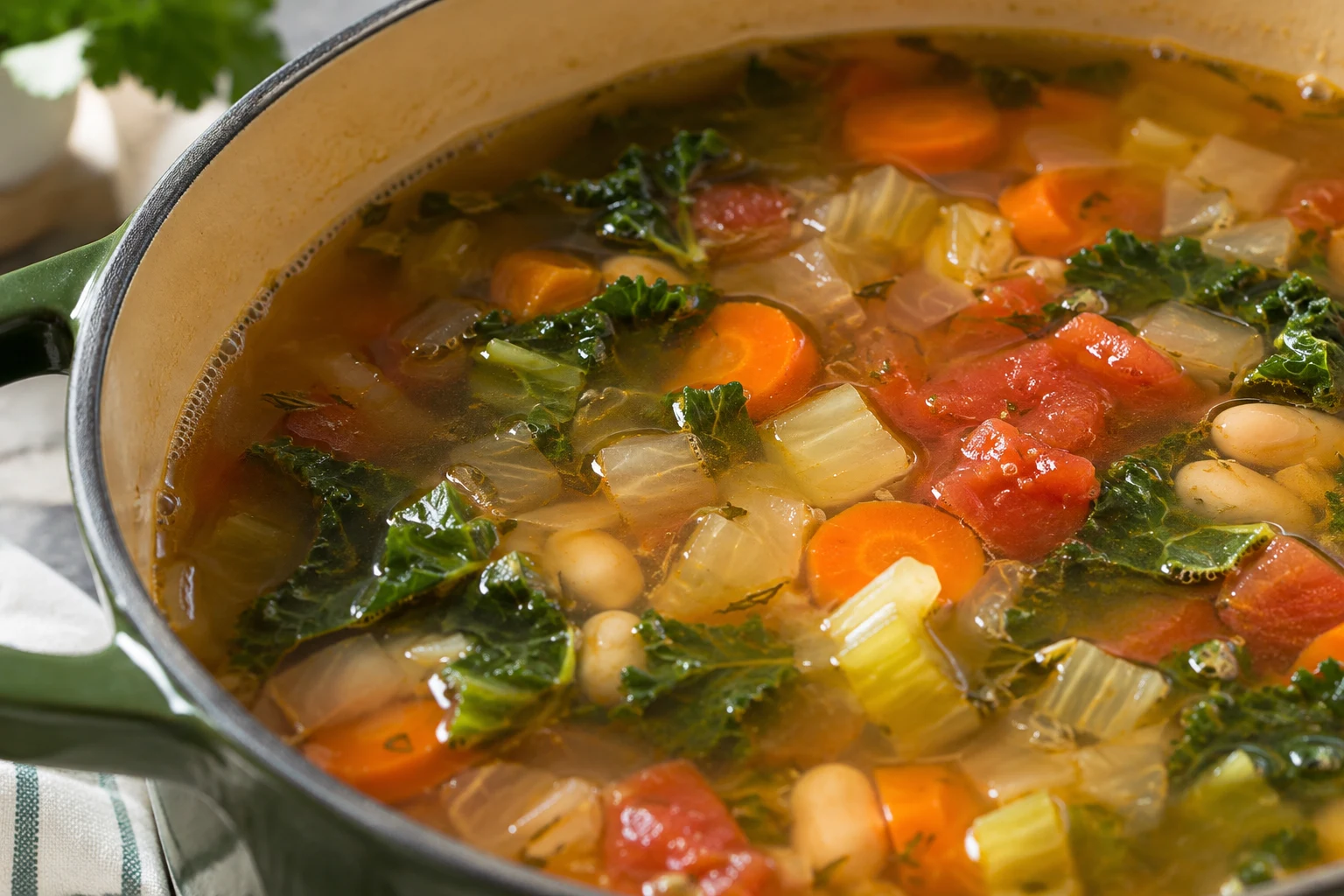
Bring the pot to the stage requested by the recipe, then lower the heat so the liquid moves gently with small bubbles rather than a vigorous rolling boil. Look again after changing the lid position: the heat that suited an open pot may be too strong once covered.
Use a burner and pot that let you maintain controlled heat. If the soup is bubbling hard, turn the heat down and give the pot time to respond. Do not leave an overflowing or rapidly drying pot unattended.
Oregon State University's Food Hero describes a barely simmering liquid when cooking lentils. That is a useful visual example, though your soup's ingredients and recipe still determine its cooking requirements.
Use the lid to manage moisture
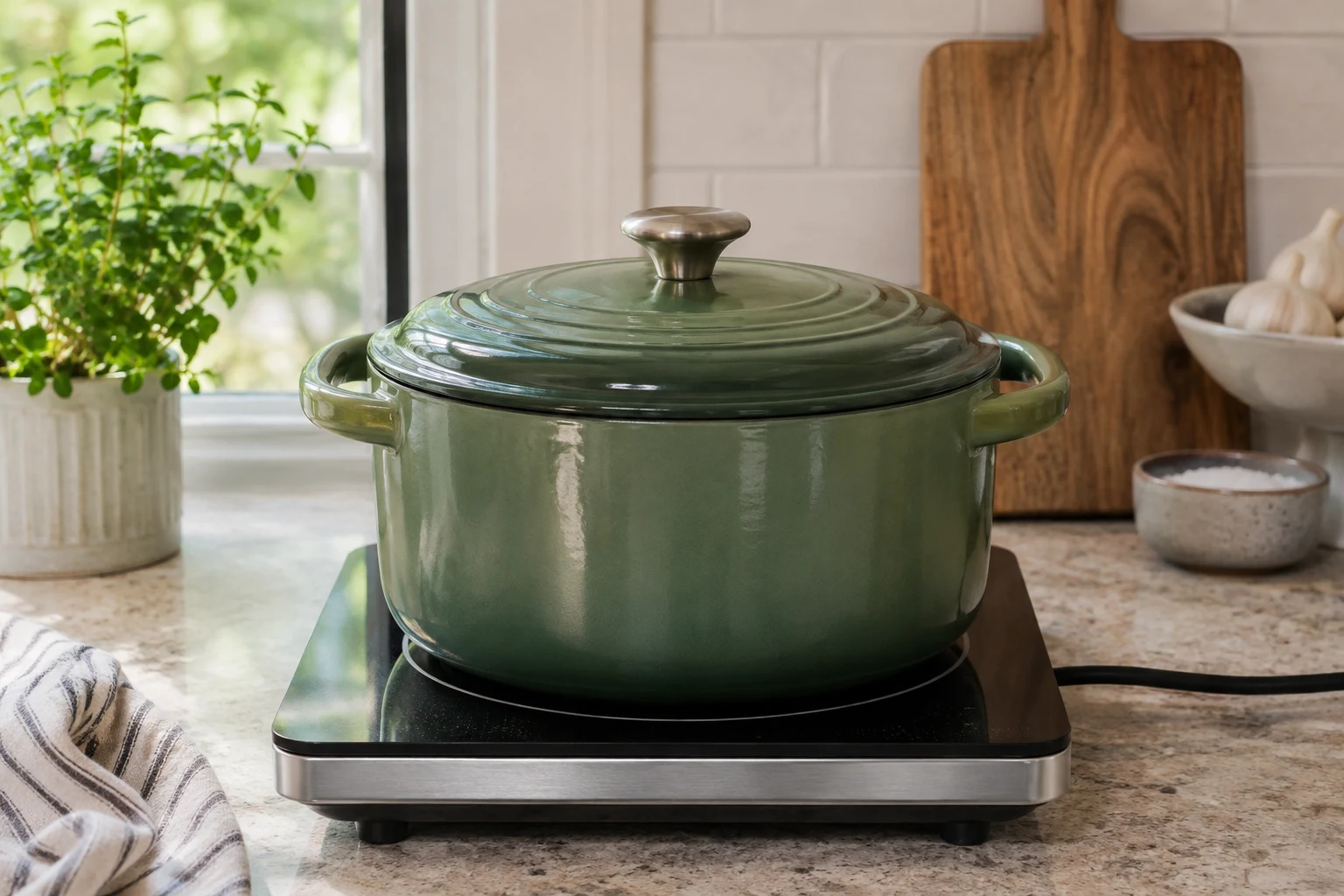
Covering is useful when the recipe needs ingredients to cook while retaining liquid. Uncovered cooking is useful when the recipe deliberately reduces a sauce or soup. Good Food's own bean-and-leek and one-pot chicken recipes demonstrate covered stages followed by uncovered finishes.
If a recipe calls for partial coverage, leave the lid as directed and keep checking the liquid. Move a hot lid with a dry mitt and lift it away from your face to avoid steam. Rest it securely rather than balancing it over the edge of the stove.
Pressure cookers and slow cookers have different liquid and lid requirements. Do not apply this stovetop checklist to opening a pressurized pot, changing a pressure-cooker's minimum liquid, or leaving a slow cooker uncovered.
Check tenderness before reducing further
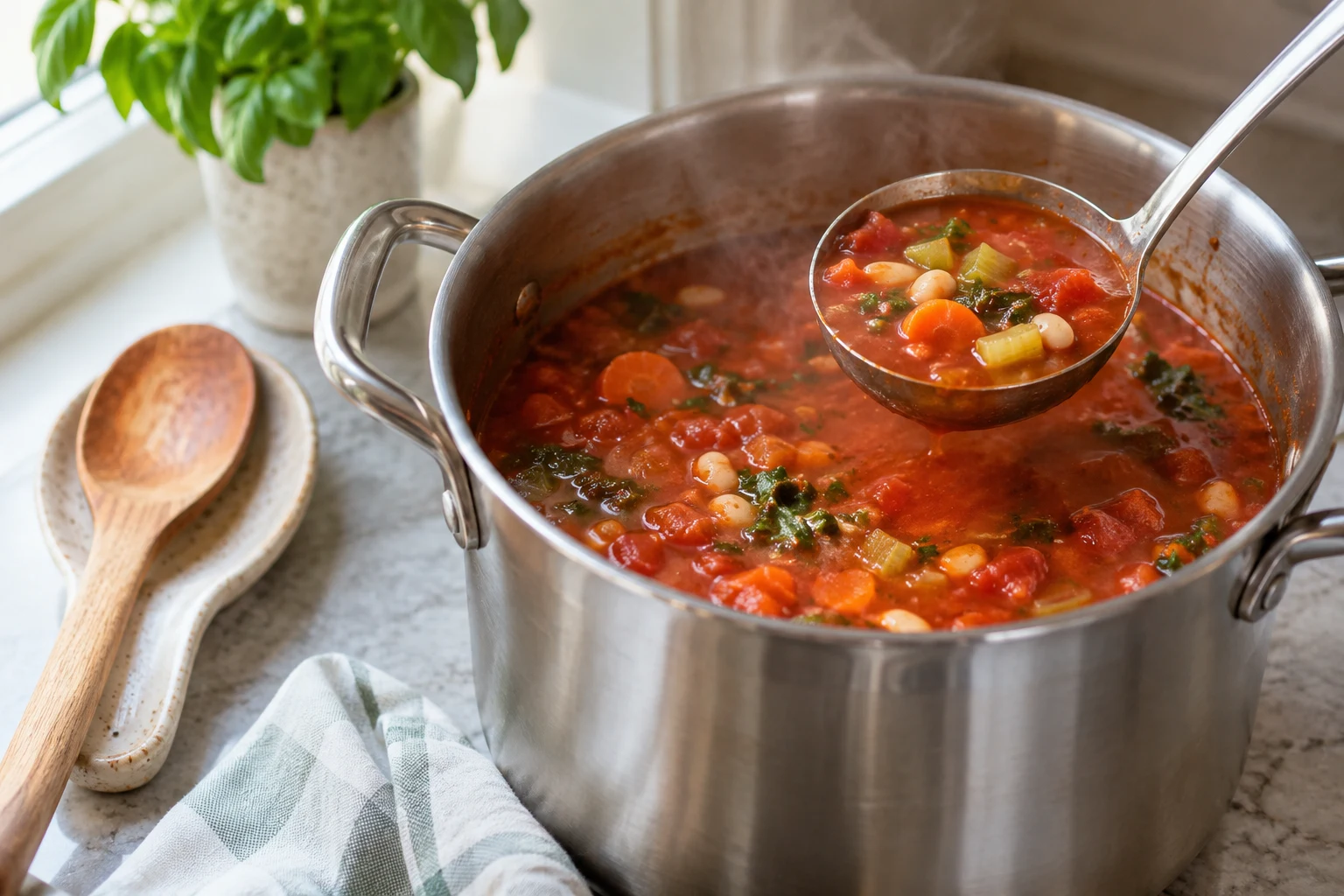
If the soup is thin but vegetables or grains are not tender, keep enough liquid for them to finish cooking. Reducing aggressively can leave the pot short of moisture before the ingredients are ready. If the recipe allows, add a little of its specified liquid and continue checking.
If ingredients are cooked and the recipe permits reduction, simmer uncovered and stir as needed to prevent sticking. Taste before adding more salt: concentrating the liquid also concentrates its seasoning. Creamy or starchy soups need particular attention to the base of the pot.
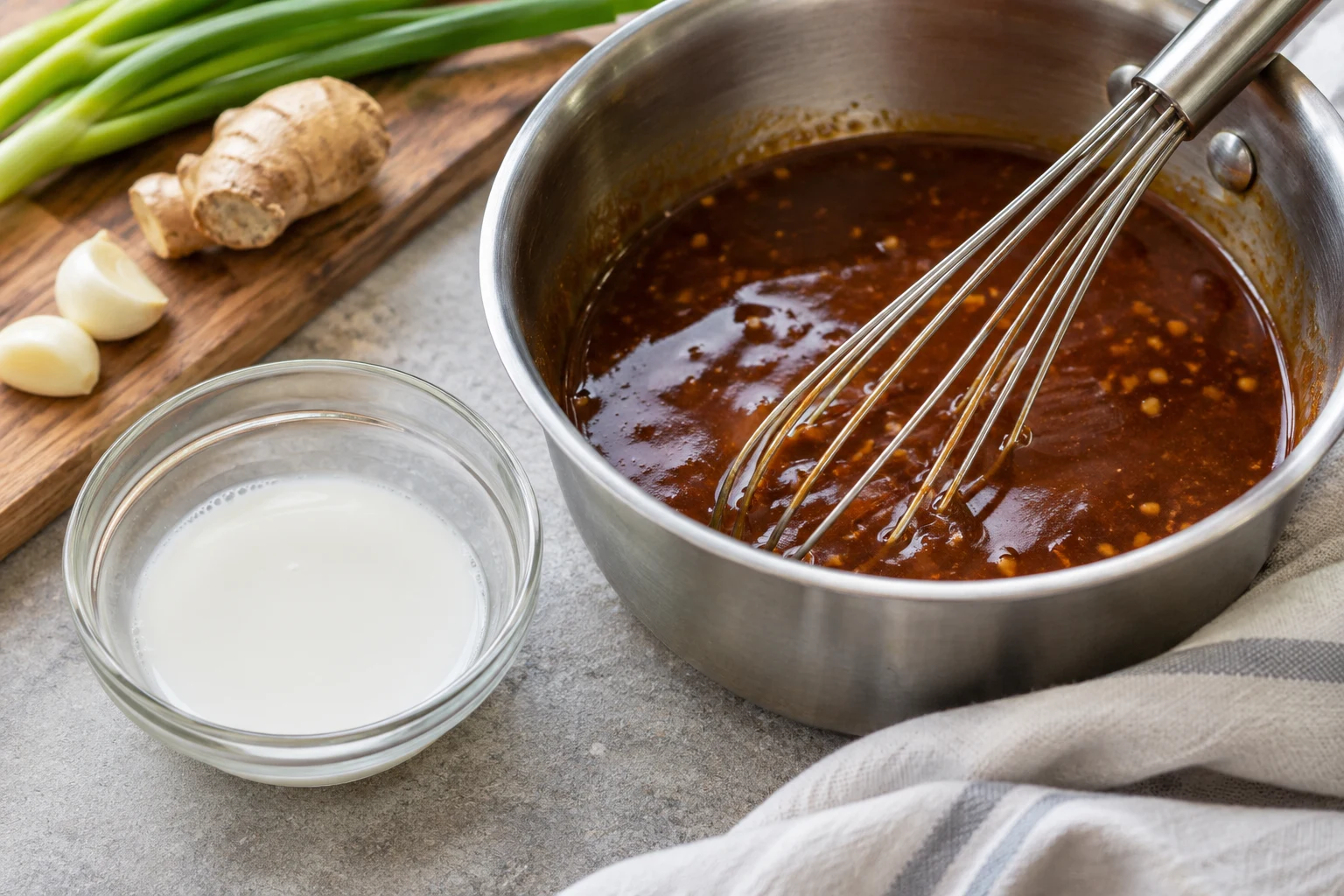
When a recipe specifically calls for cornstarch, use the cold-liquid slurry method rather than replacing its thickening step with extra reduction.
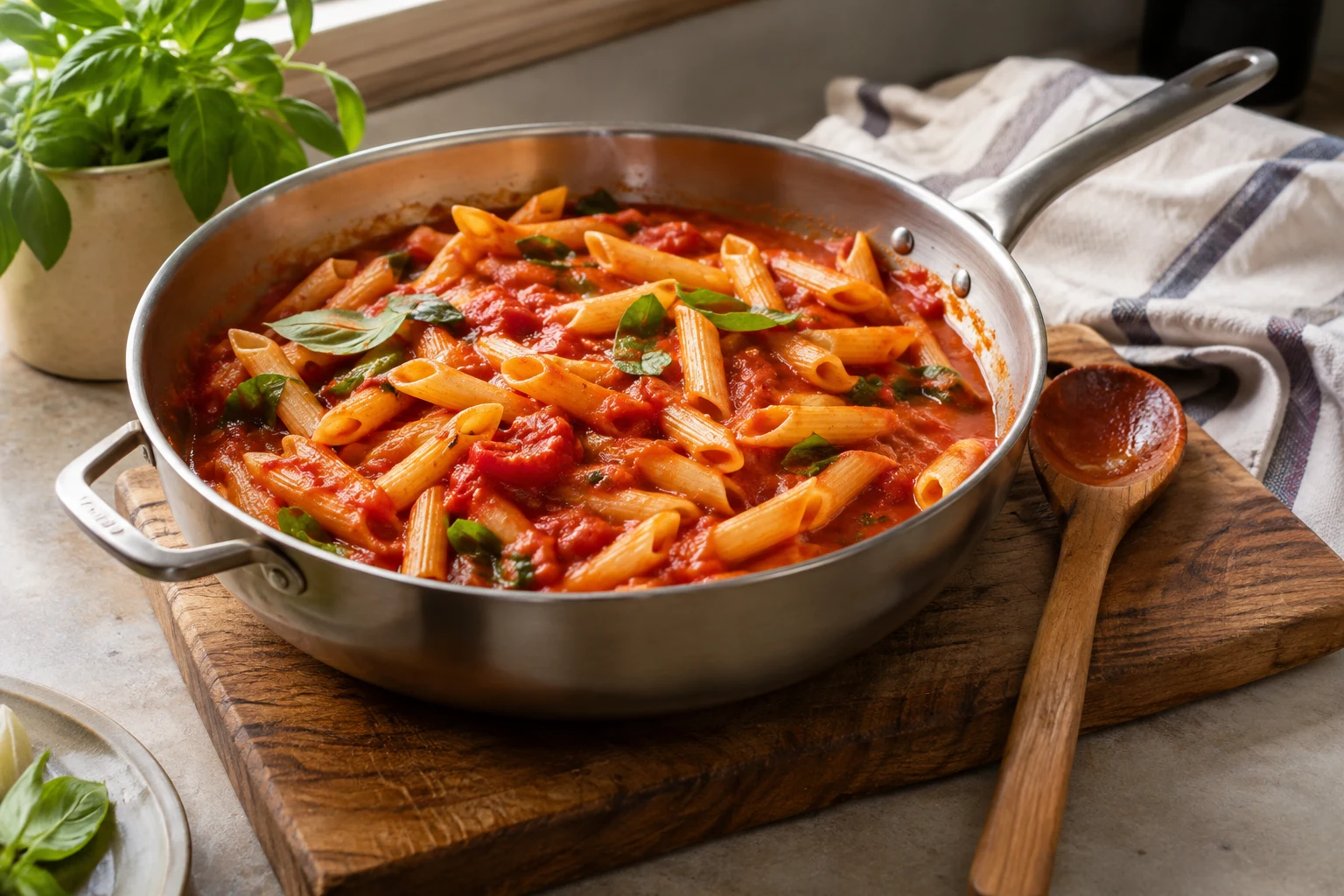
One-pot pasta has an additional absorption problem; use our watery one-pot pasta guide for that specific task rather than applying soup adjustments blindly.
Read these recipes' lid instructions
The mushroom-barley soup includes a covered stovetop stage; the white-bean and roasted-pepper soups specify uncovered simmering. Keep each recipe's separate finishing and food-safety steps.
- White Bean and Kale Soup with Parmesan Topping
- One-Pot Creamy Roasted Red Pepper and Tomato Soup
- One-Pot Rustic Wild Mushroom and Barley Soup
- Hearty Skillet Chicken and Wild Mushroom Stew
This source-based guide draws on Good Food's published cooking methods and Food Hero's simmering guidance. Photos are AI-generated editorial illustrations, not measured kitchen trials.