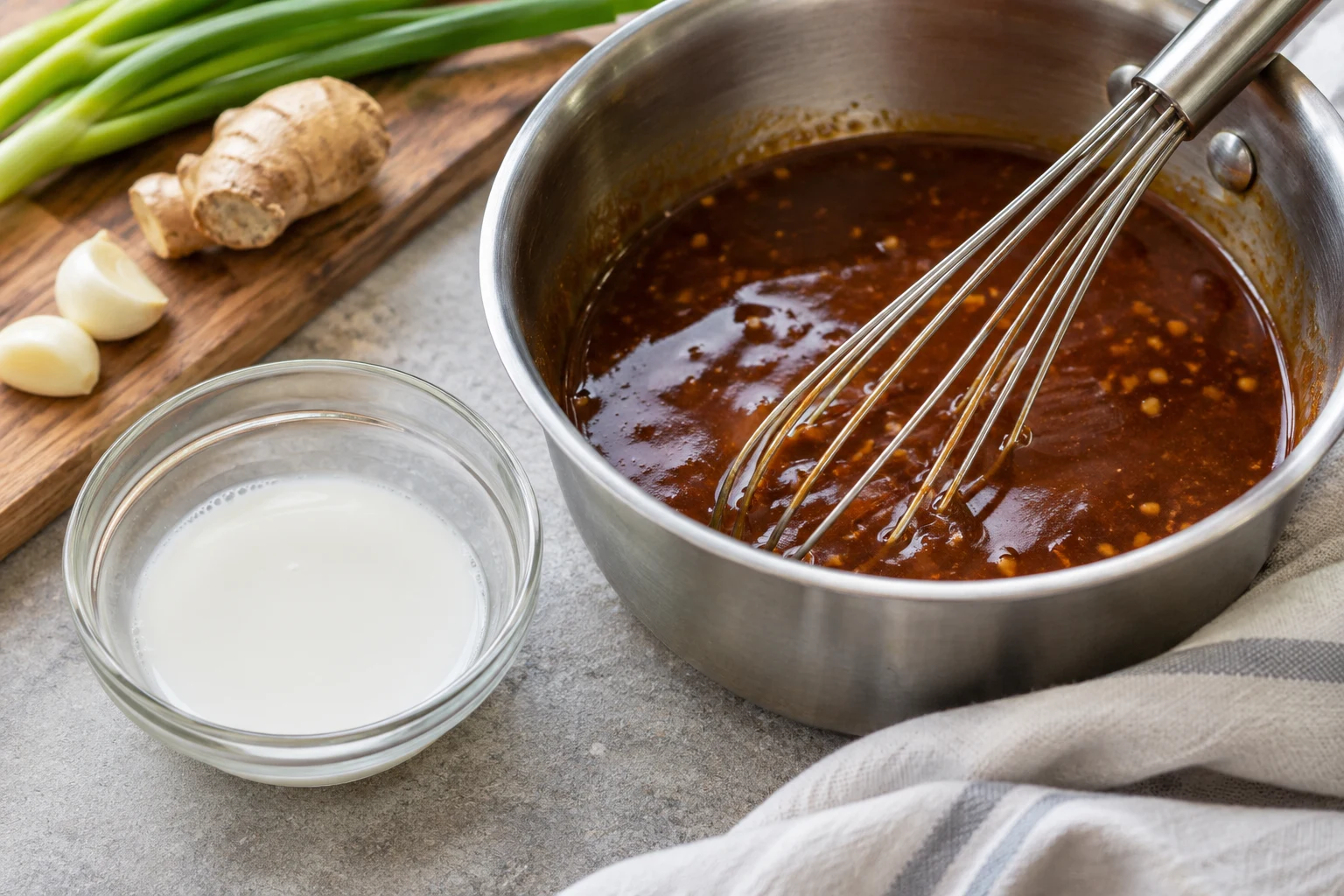
A cornstarch slurry is a smooth mixture of cornstarch and cold liquid prepared before it goes into hot sauce. It helps distribute starch through the sauce instead of leaving dry powder to gather into lumps.
Use the amount in your recipe. A watery one-pot pasta may need a different fix; see our one-pot pasta liquid guide before adding a thickener that was never part of that dish.
Make the slurry with cold liquid
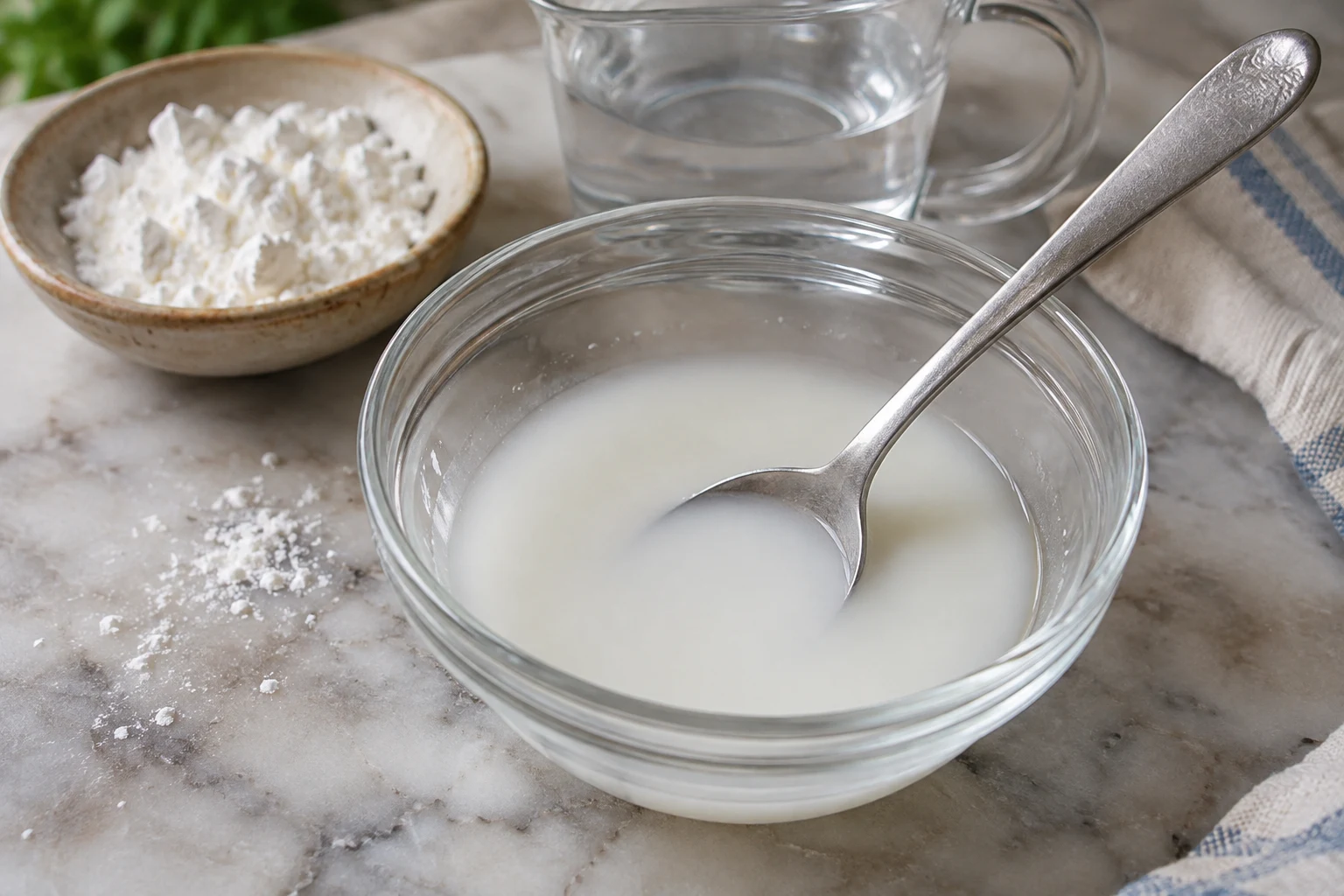
Measure the recipe’s cornstarch into a small bowl, then stir in its specified cold water, broth or other cold liquid until the mixture is smooth. Check the bottom and corners for dry powder. Argo’s product guidance calls for cold dispersion before starch is added to hot liquid.
Do not scoop boiling broth into dry starch and expect the same result. Keep a small portion of the recipe’s cold liquid ready when setting out the other ingredients. Do not remove liquid from rice or another absorption-cooking step unless the recipe explicitly allows it.
There is no need to apply one universal slurry ratio to all four recipes below. Their starch amounts, sauce quantities and intended finishes differ. Cornstarch used as a dry coating on food is also a different technique; adding water to that coating would change the method.
Stir again and add it as directed
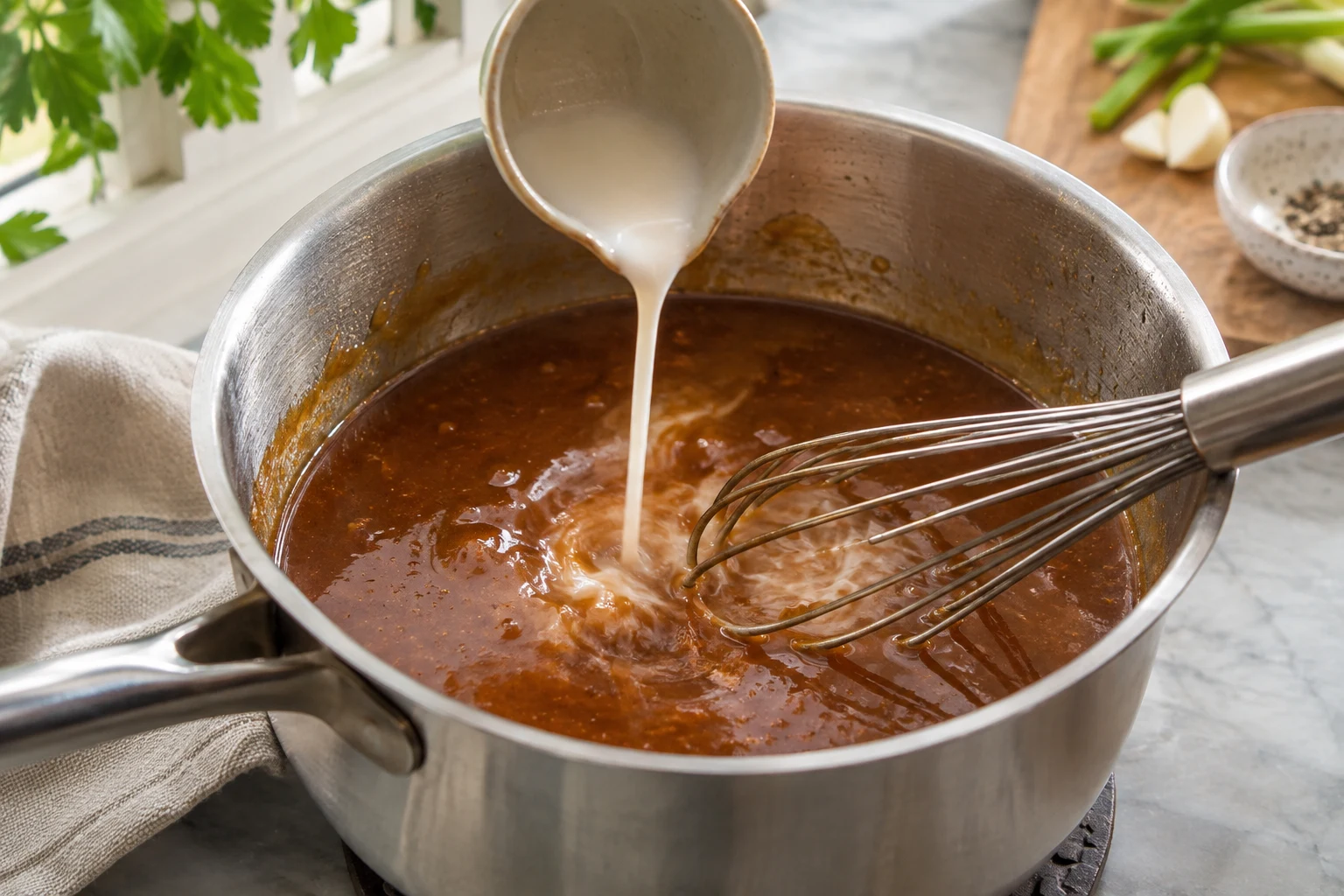
Starch can settle while you cook the rest of the meal. Stir the bowl again immediately before using it, reaching the bottom so the mixture is evenly suspended.
Add it at the stage named in the recipe, stirring the receiving liquid as directed. A small controlled pour is easier to distribute than dumping a settled mass into one spot. Do not keep tipping in dry cornstarch to compensate for a sauce that has not finished heating.
For pressure-cooker recipes, retain the stated pressure and release steps. If the recipe thickens after pressure cooking, add the slurry afterward using its specified sauté step; do not improvise by closing and repressurizing a thickened sauce. A sheet-pan glaze may instead mix slurry into reserved sauce before its final oven stage. Keep that recipe’s sequence rather than transferring a saucepan method wholesale.
Cook before judging the thickness
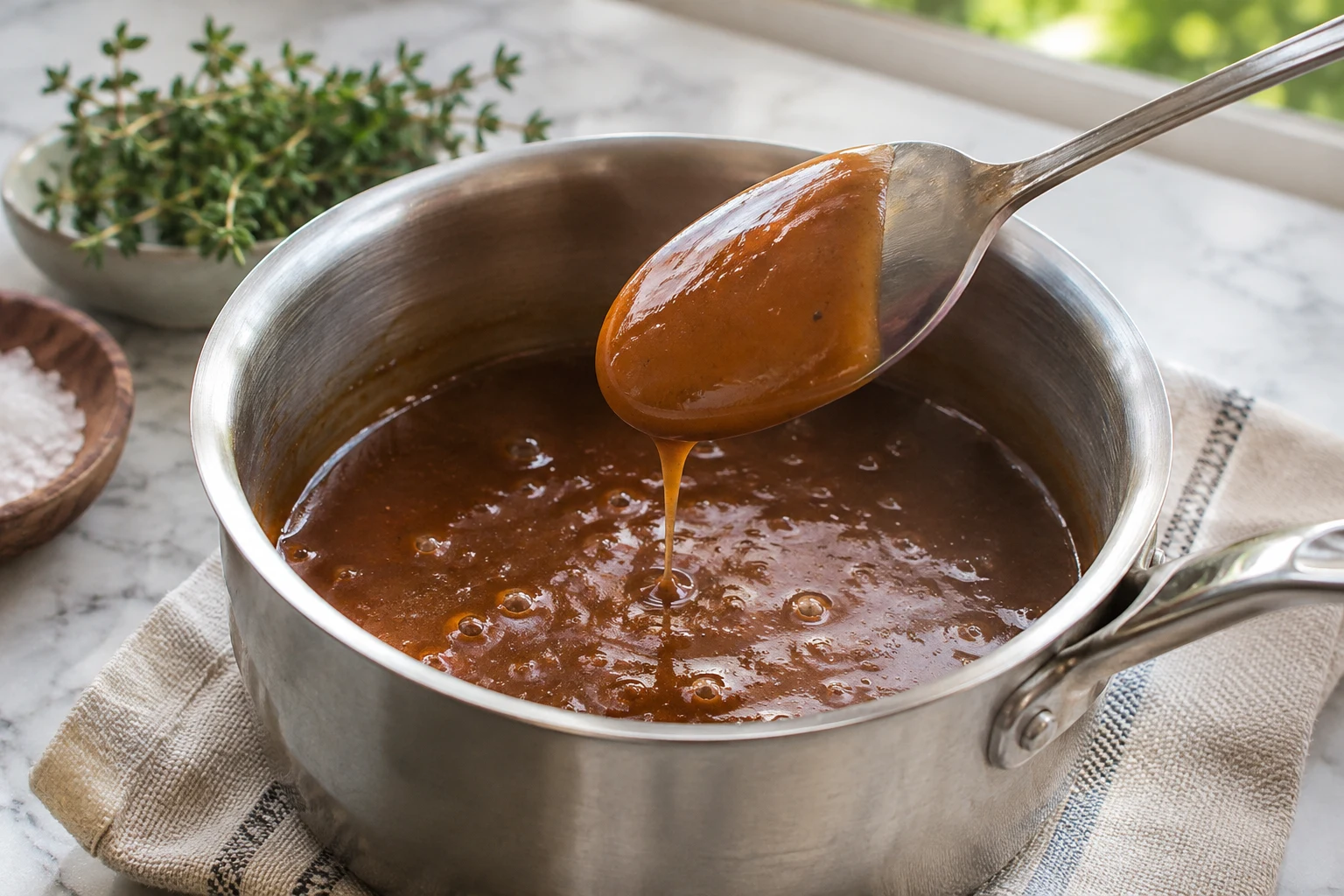
Let the mixture complete the recipe’s cooking step before deciding it needs more starch. Argo’s basic guidance explains that cornstarch needs cooking to develop its thickening effect. Its Easy Gravy recipe uses a brief boil with stirring; other formulas below have their own timing and heating instructions.
Look at the sauce as it coats the food or spoon, then follow the recipe’s endpoint. Do not chase a spoon-standing thickness if the recipe calls for a light glaze. More starch changes the amount in the formula, so avoid repeated additions without a clear recipe adjustment.
If the sauce becomes thinner after prolonged cooking, more time is not necessarily the answer. Argo notes that excessive cooking, vigorous stirring and certain ingredient balances can reduce thickening. Stop and check the recipe rather than turning the heat up indefinitely. No universal lump-removal or rescue result is promised here.
Four recipes with a slurry step
Each recipe below explicitly includes cornstarch mixed with liquid. Read its full sequence, including when sauce is reserved and when the thickening step happens.
- Instant Pot Orange-Glazed Tofu with Ginger Rice
- Instant Pot Sweet and Sour Tempeh with Pineapple and Bell Peppers
- One-Pot Asian-Inspired Ginger Beef and Bok Choy Stir-Fry
- Sheet Pan Teriyaki Glazed Tofu with Roasted Snow Peas and Carrots
This source-based guide draws on Argo’s product instructions, cooking FAQ and its own gravy and stir-fry sauce recipes. No measured sauce trials were performed for this article. AI-generated photographs are preparation illustrations.