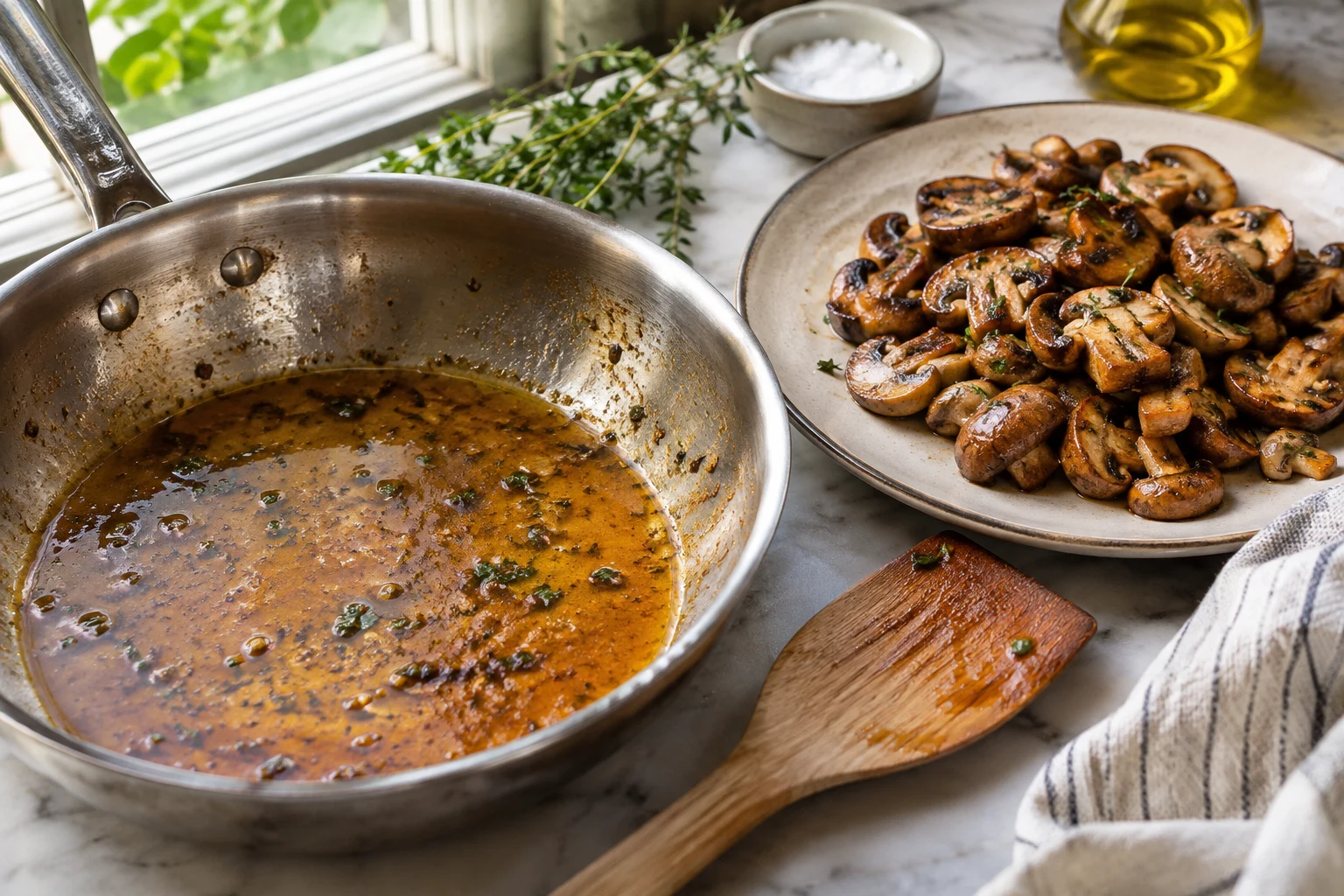
You can deglaze a pan without wine. Water or stock can loosen the browned food left after searing and carry that flavor into a sauce, soup or stew. Start by checking that the residue is browned rather than burned, and that the cookware is suitable for the method.
Deglazing is a step within a recipe. It does not replace the recipe's cooking time, required liquid or food-safety checks.
Inspect the browned layer first
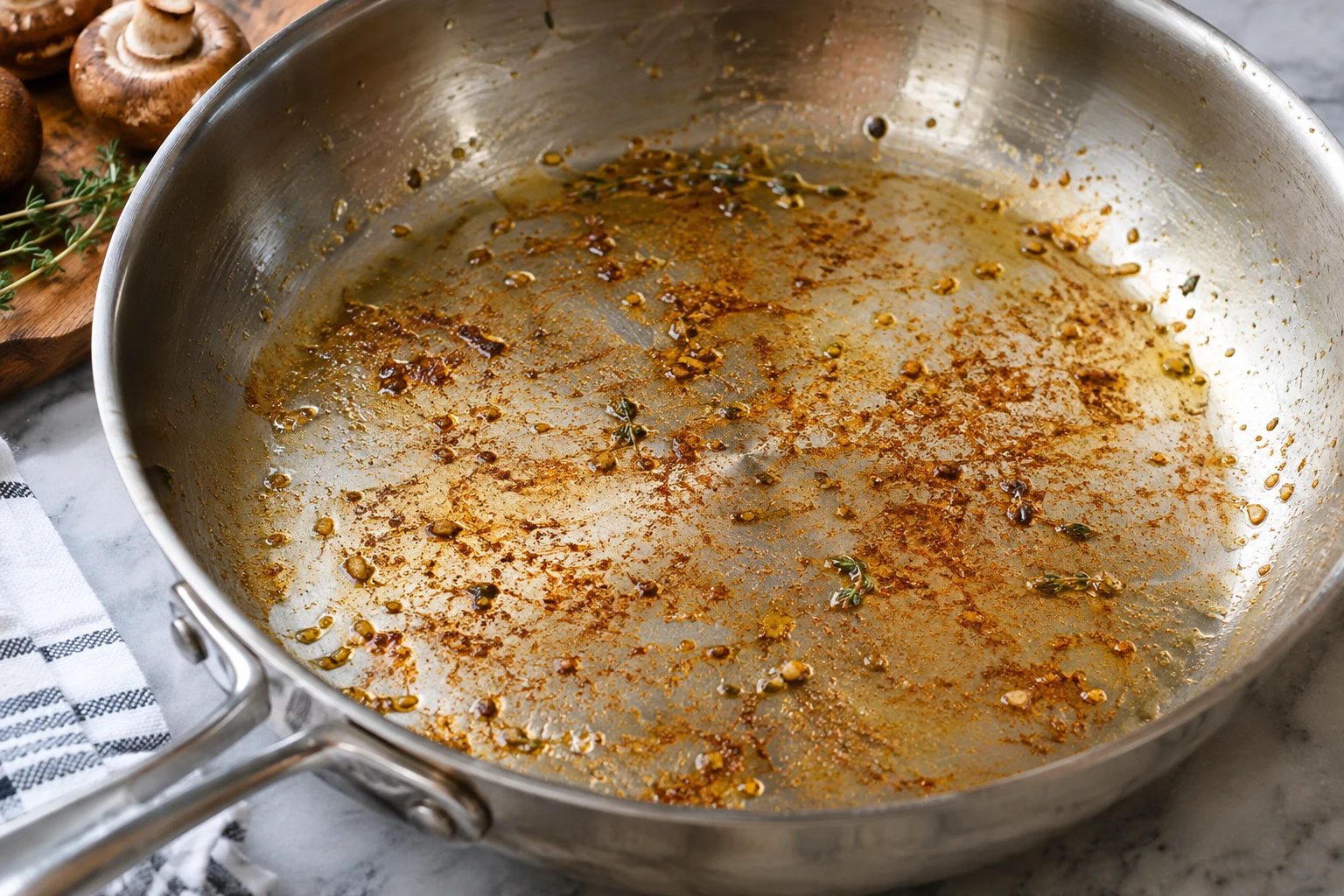
After removing the food as your recipe directs, look at the pan base. Golden to deep-brown patches can be useful fond. Black residue with an acrid smell is not something to dissolve into dinner. Stop cooking if the pan is smoking; reduce or turn off the heat and handle the problem before adding liquid.
All-Clad describes deglazing as using liquid to release browned residue and identifies stainless steel as well suited to building fond. Follow your pan's care instructions. A nonstick pan may develop little fond, so there may be little to capture; do not increase the heat to force sticking.
Choose stock or water for the dish
Stock adds its own flavor and salt. Water provides a more neutral starting point. Choose unsalted or lower-sodium stock if the other ingredients are already salty, and taste again after reducing.
The Michelin Guide's deglazing explanation includes both water and stock as options. A recipe that uses wine for acidity and flavor may taste different with stock, even when the browned layer releases successfully. Follow an explicit non-wine alternative when the recipe supplies one. Do not replace a measured wine amount with undiluted vinegar.
Add liquid with controlled heat
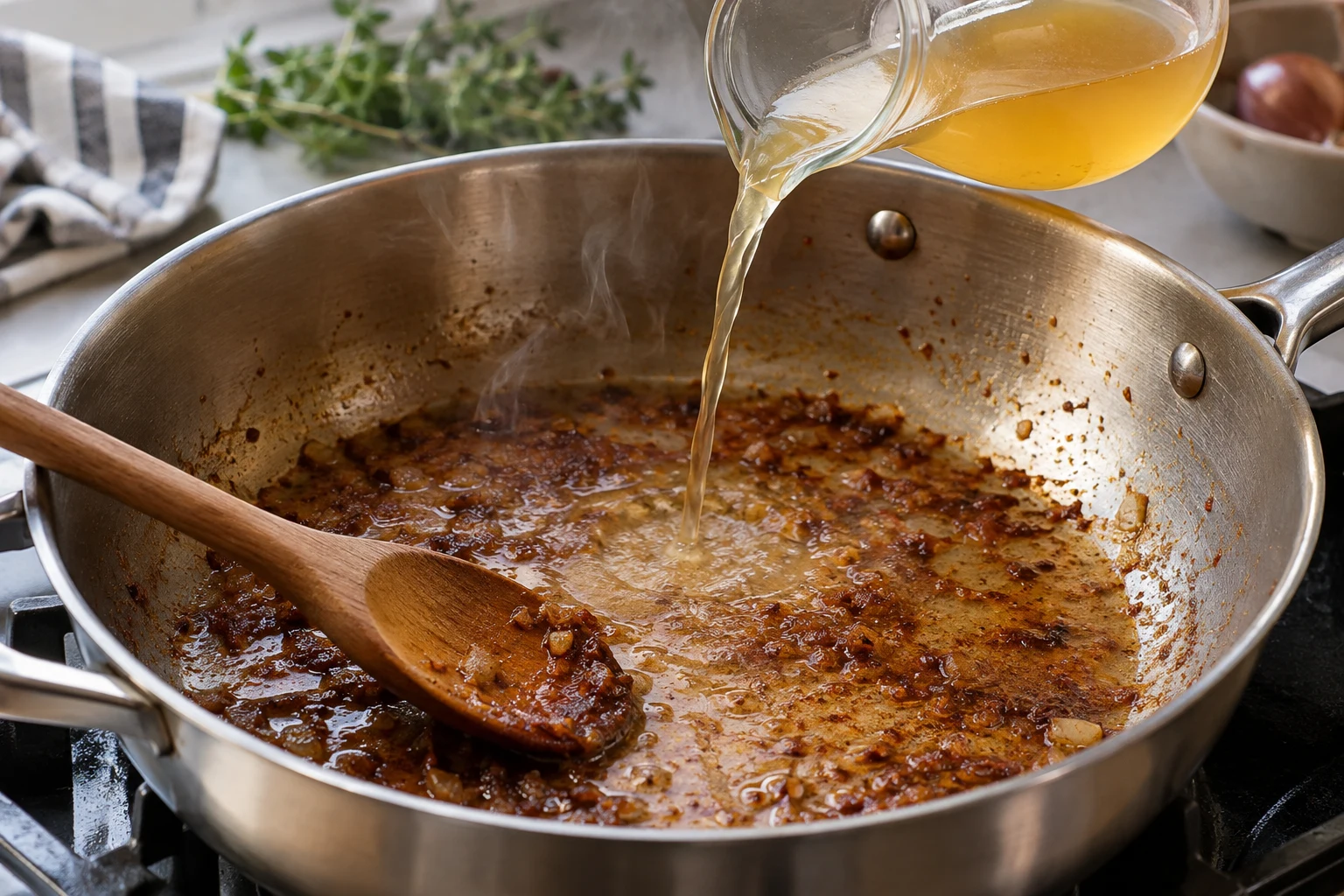
Have warm or room-temperature liquid and a wooden or heat-safe silicone utensil ready, consistent with All-Clad's water-temperature guidance. Reduce the heat if the pan is fiercely hot. Keep your face away from rising steam and add the recipe's liquid cautiously. Stir across the base to loosen the brown patches without scraping the metal with a damaging tool.
The amount should suit the recipe. A sauce needs a manageable shallow pool; a soup may include much more liquid later. If a small splash evaporates before you can stir, take the pan off the heat and reassess rather than repeatedly pouring into a smoking pan.
Do not plunge hot cookware into cold water. Deglazing food during cooking and shocking a pan during cleanup are different situations; follow the manufacturer's instructions for both.
Finish the actual recipe
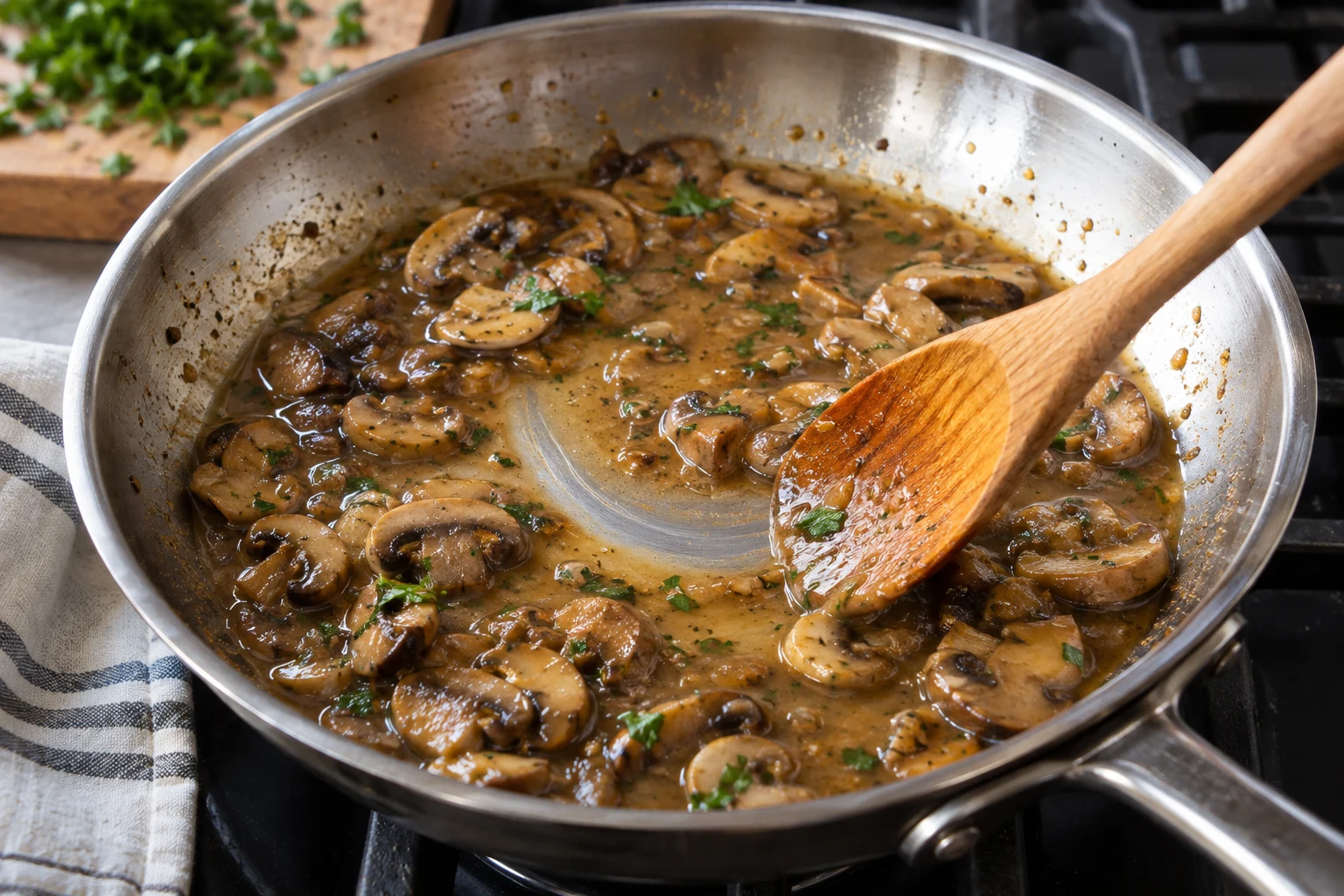
Once the base is loosened, continue the recipe's sequence. Reduction concentrates salt as well as flavor. Taste before adding more seasoning, and stop reducing before the sauce dries onto the base again.
For an electric pressure cooker, follow the recipe and appliance instructions for clearing the pot bottom before sealing. Do not use this skillet explanation to change pressure-cooking liquid requirements or release methods.
Recipes that show where the step belongs
These published recipes include a liquid addition and instructions to deglaze or clear browned residue. Read their full quantities and cooking sequences:
- Instant Pot Moroccan Chickpea Stew
- Instant Pot Creamy Butternut Squash Soup
- Instant Pot Chicken and Vegetable Risotto
- Instant Pot Moroccan Lamb and Apricot Tagine
Source notes: All-Clad's deglazing and cookware guidance and the Michelin Guide's technique explanation inform this guide. We have not conducted a new cooking trial; the photographs are AI-generated editorial illustrations.